Commercial Tenant Improvement in Enterprise, NV
If you’re buildout a commercial space in Enterprise, you’re working in one of the Las Vegas valley’s most active — and most procedurally specific — TI markets. Every permit here routes through Clark County, plan-check timelines run 4–6 weeks, and the mid-2000s strip centers that define the area carry real field surprises. Our Commercial Tenant Improvement crew knows exactly how to navigate all of it. Call us at (725) 444-6037 to get started with a free estimate.
Why Anytime Anywhere Builders Is Enterprise’s Preferred Commercial Tenant Improvement Contractor
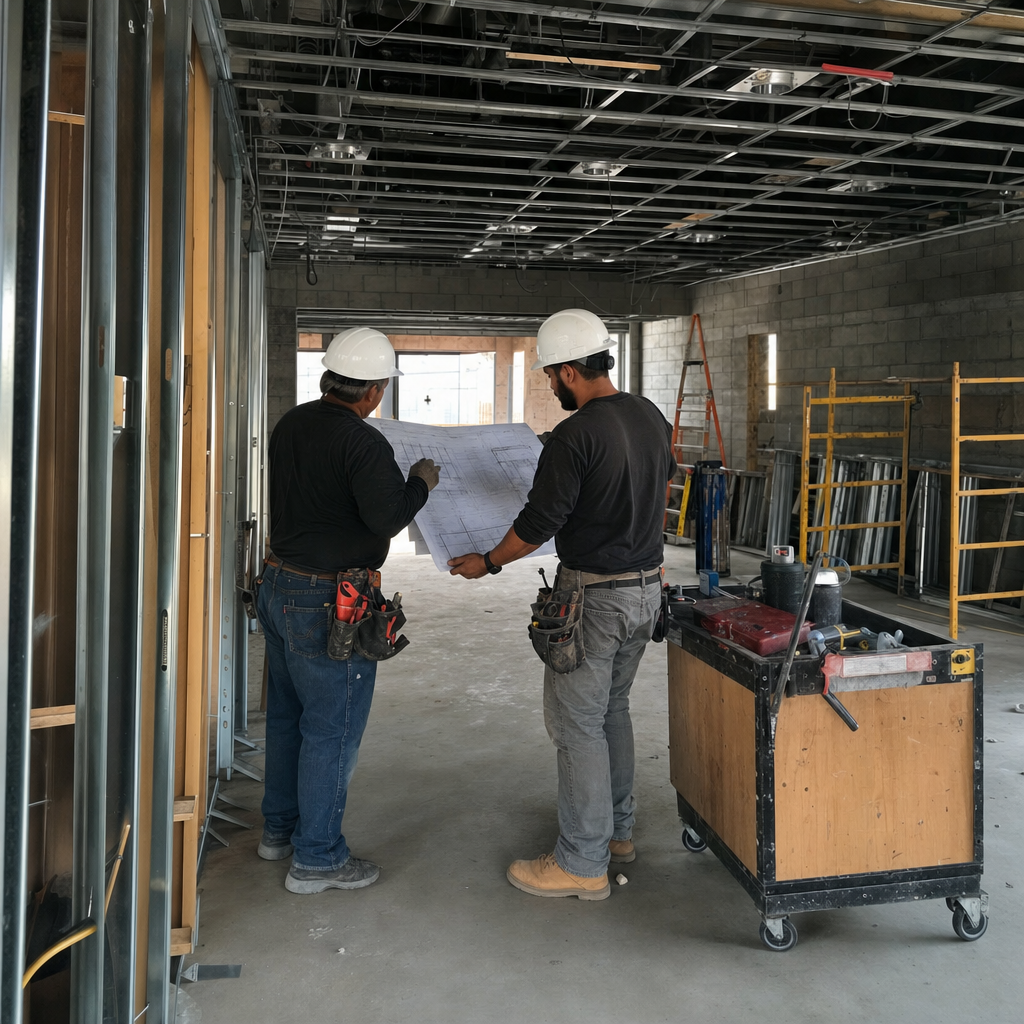
We’ve spent 11 years working across the Las Vegas valley, and Enterprise is a market we know down to the permit counter. Our crew understands that commercial TI work here isn’t submitted to a city hall — it goes through Clark County’s Building Department at 4701 W. Russell Rd., and that distinction alone changes how every project timeline gets built. We don’t bolt the permit application onto the end of the design phase. We file it the day drawings are signed, because losing four weeks to a plan-check queue is real money for a tenant with a lease clock running.
Emily Cole — our owner and lead technician — is on-site for every commercial project we take on in Enterprise. You won’t be handed off to a project manager who’s never swung a hammer. Emily has personally led builds from storefront renovations along South Las Vegas Boulevard to full office buildouts near Southern Highlands Parkway. That direct ownership shows up in our reviews: 613 verified customers have rated us 4.9 out of 5 stars, and that reputation holds in Enterprise specifically because we deliver what we schedule.
Our Commercial Tenant Improvement Services in Enterprise
Office Buildout
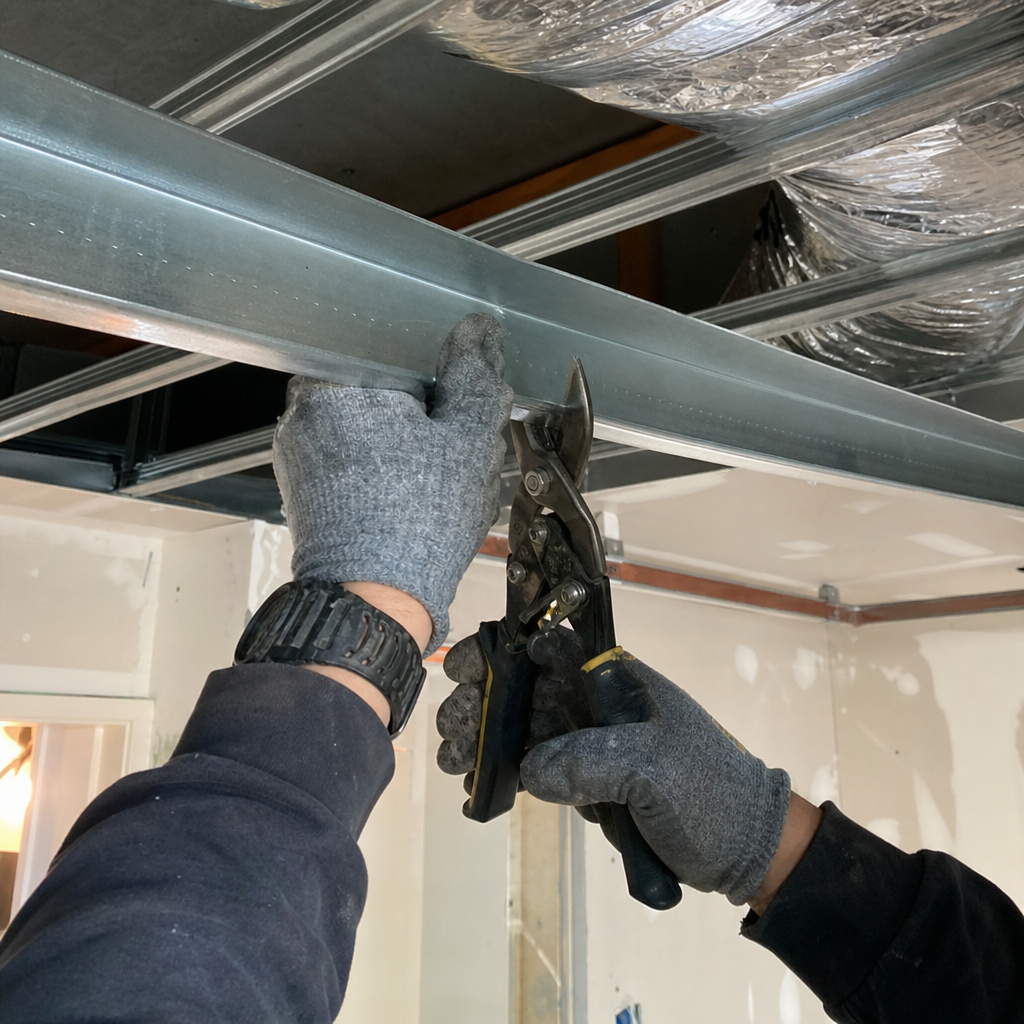
A well-executed office buildout in Enterprise has to account for the building stock you’re working with. Most of the strip centers along Rainbow Boulevard and South Las Vegas Boulevard were built fast during the mid-2000s boom — light-gauge steel framing, single-pane glazing, and mechanical rough-ins that were code-compliant at the time but never designed for a 25-year lifecycle. We recently completed a 3,200-square-foot office buildout for a financial services tenant near Southern Highlands Parkway where the existing storefront framing had thermally cycled to the point of fastener pull-through after years of 115°F summers. We reframed the demising walls with 20-gauge studs, swapped the single-pane storefront glass for Andersen commercial units rated for extreme heat exposure, and clad the exterior bulkhead in James Hardie fiber cement to stop the stucco cracking that had been migrating into the tenant’s interior finishes. The build-out passed Clark County inspection on the first review because our plans were submitted with Nevada-compliant Title 24 energy documentation already attached.

Storefront Renovation
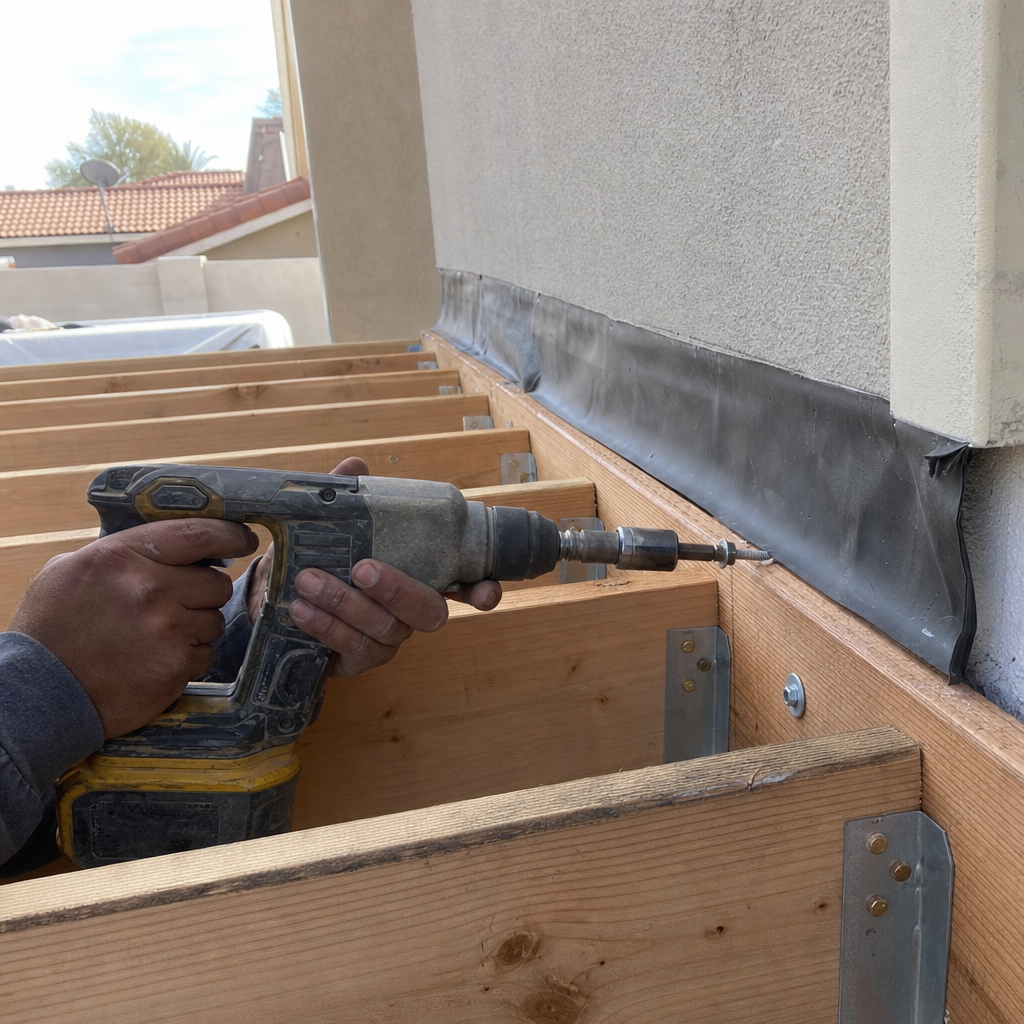
Storefront work in Enterprise carries a layer of complexity that catches out-of-area contractors off guard: commercial nodes inside or adjacent to Southern Highlands can fall under HOA architectural review, which means your storefront frame color, cladding product, or glazing spec may need written HOA approval before you pull a county permit. That review process can legally run 30–45 days. We file with the HOA review board before we ever submit to Clark County — running both tracks in parallel so your move-in date doesn’t slip. For cladding, we regularly spec James Hardie fiber cement on Enterprise storefronts because it holds up against the thermal expansion cycles that buckle painted stucco on 15–20-year-old commercial facades.

ADA Compliance Upgrades
Enterprise’s 2000s-era tenant spaces were built to the ADA standards of that decade — which means many of them fall short of current requirements the moment a new tenant triggers a change-of-occupancy or substantial improvement threshold. We routinely find compliant-at-the-time restroom configurations that are now under the required turning radius, exterior accessible routes with cross-slopes that exceed 2%, and service counters that need height modification. We scope ADA upgrades as a standalone service or folded into a broader TI build, and we handle the Clark County documentation so your certificate of occupancy doesn’t stall over accessibility findings at final inspection.
Commercial Flooring
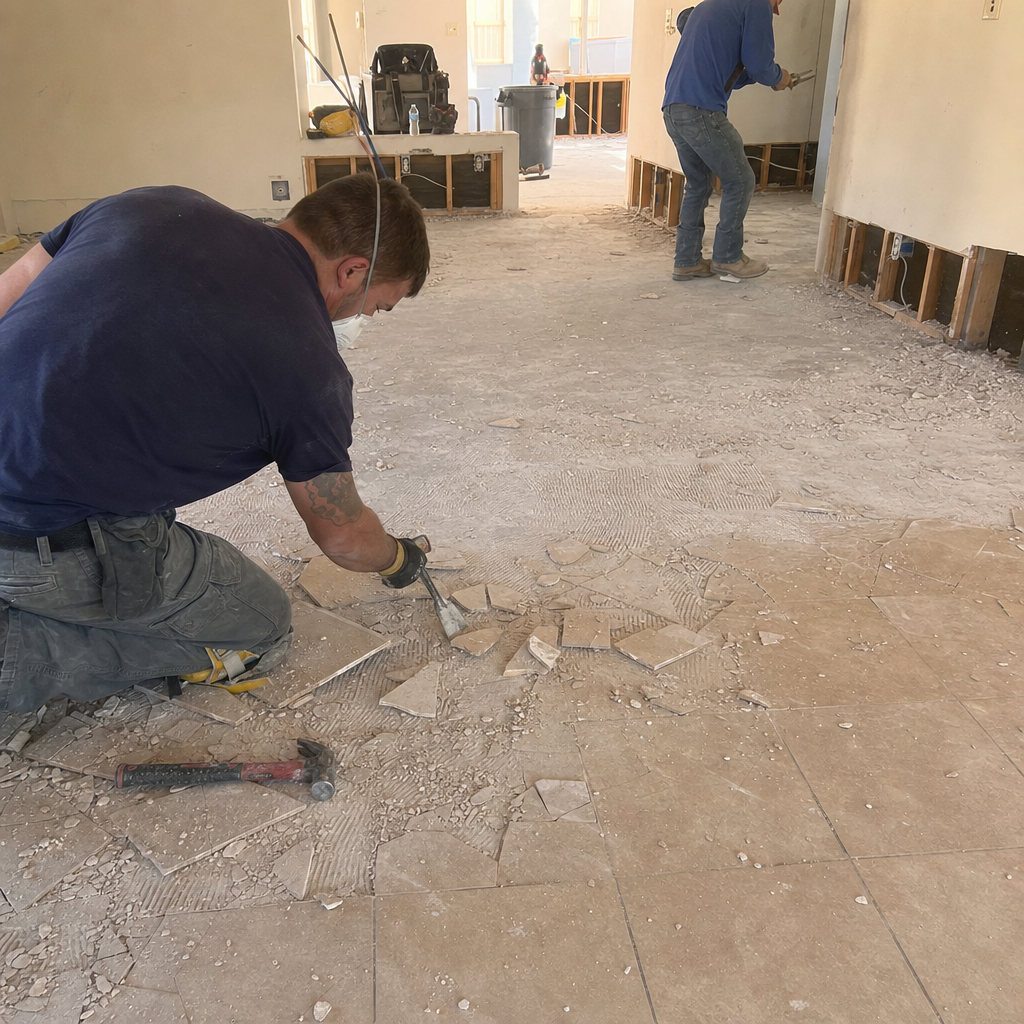
Flooring in an Enterprise commercial space gets punished by two things: the heavy foot traffic that comes with retail and service businesses, and the extreme temperature swings that affect slab-on-grade installations when HVAC systems are undersized or the space sits vacant between tenants. We spec and install LVP, polished concrete, and commercial-grade carpet systems depending on occupancy type, and we always check slab moisture readings before any glue-down installation — a step that gets skipped on fast-turn jobs and causes adhesive failure within the first year.
Retail Renovation
Retail TI in Enterprise moves at the speed of your lease commencement date. We work backwards from that date to schedule Clark County plan-check, rough-in inspections, and final — not forward from “when we get around to filing.” Retail spaces along the 89139 zip code’s commercial corridors typically need lighting upgrades, demising wall reconfiguration, and updated electrical panels to handle modern POS and display loads that the original 2005-era panel never anticipated.

What happens when you call
- 1
A real person answersNo phone trees — you reach a local pro.
- 2
You get an upfront price rangeHonest numbers before anyone is dispatched.
- 3
A background-checked tech heads outLicensed & insured, dispatched right away.
- 4
You approve before work beginsNothing starts until you say go.
Trusted Brands We Work With on Enterprise Projects
The materials we spec for Enterprise commercial projects are chosen specifically for the Mojave Desert environment — not pulled from a generic catalog. For glazing on storefronts and office buildouts, we install Andersen and Pella commercial units engineered for high UV and thermal load. Exterior cladding goes to James Hardie fiber cement or LP SmartSide where the application fits. Interior millwork and door units are sourced from JELD-WEN and Marvin. We carry inventory relationships that support fast-turn projects in Enterprise, so material lead times don’t become the reason a schedule slips.
Common Commercial Tenant Improvement Problems We See in Enterprise
- Plan submissions without a licensed Nevada contractor of record. Out-of-area GCs regularly submit TI permit applications to Clark County without a properly licensed Nevada contractor named on the documents. Clark County issues an automatic rejection, and the 4–6 week plan-check clock restarts from zero — a delay that puts lease commencement dates in serious jeopardy.
- Stucco cracking on mid-2000s commercial facades. Enterprise’s 115°F summer highs drive severe thermal expansion in the stucco systems applied to strip centers built during the 2000s boom. The cracking telegraphs through to interior finishes, admits moisture during the infrequent but intense desert rain events, and signals underlying framing or sealant failure that a surface coat won’t fix.
- Accelerated plumbing corrosion from hard water. Colorado River-sourced water in Enterprise carries extreme mineral hardness. Contractors who spec standard builder-grade copper supply lines in commercial restroom additions are setting up pinhole leaks inside finished walls within 18–24 months. We select appropriate pipe materials and document them in our submittal package.
- HOA architectural review holds on exterior-facing TI scopes. Commercial spaces inside Southern Highlands and adjacent master-planned nodes are subject to HOA architectural review for any exterior work. Contractors who pull the Clark County permit before clearing materials and finishes with the HOA board face a 30–45 day stop-work exposure that no fast-track schedule can absorb.
Pricing for Commercial Tenant Improvement in Enterprise, NV
Enterprise TI pricing reflects both the scope of work and the building conditions you’re starting from. Here are honest ranges based on current market conditions in the 89139 area:
- Office Buildout (shell to finished): $45–$85 per square foot, depending on demising wall complexity, mechanical upgrades, and glazing specification.
- Storefront Renovation: $18,000–$55,000, depending on linear footage, cladding material, and whether the HOA review process requires modified submittals.
- ADA Compliance Upgrades: $8,500–$28,000 for a typical Enterprise commercial suite, depending on restroom reconfiguration depth and accessible route work required.
- Commercial Flooring Installation: $4–$12 per square foot installed, depending on material type and slab prep requirements.
- Retail Renovation (partial build): $25,000–$75,000 for a typical 1,200–2,500 sq ft Enterprise retail space.
Every project starts with a free, no-obligation estimate. Call (725) 444-6037 and we’ll walk the space with you, identify any Clark County or HOA submission requirements specific to your location, and put numbers on paper the same week.
We Also Serve Cities Near Enterprise
Our commercial TI work extends throughout the southwest Las Vegas valley. Beyond Enterprise, we regularly complete projects in Spring Valley, Paradise, Winchester, and Summerlin South. If your business is located anywhere in this corridor, we’re familiar with the local building conditions, permit jurisdictions, and commercial stock that affect how your project gets built and inspected.
Serving Enterprise, NV — Our Local Coverage Area
We’re based in the Enterprise area and know this community well. Use the map below to see our service coverage — if you’re nearby, we can almost certainly help.
FAQs — Commercial Tenant Improvement in Enterprise
Your permit goes through Clark County — there is no City of Enterprise, because Enterprise is an unincorporated community. Every commercial TI submittal in the 89139 area routes to the Clark County Building Department at 4701 W. Russell Rd., and plan-check for commercial TI submittals currently runs 4–6 weeks. That timeline is non-negotiable, which means it needs to be the first line in your project schedule — not something you work around after design is done. Call (725) 444-6037 and we’ll help you map out a permit-realistic schedule from day one.
Enterprise’s commercial strip centers were built quickly during the 2000s growth boom with builder-grade stucco systems that weren’t engineered for a 50-year lifecycle in a desert climate that sees 115°F summer highs. Thermal expansion and contraction at that temperature range stresses the stucco-to-framing bond year after year until the cracks open. The original sealants dry out and shrink in UV exposure that’s roughly twice as intense as national averages. By year 15, most of these facades need full recoat or replacement with a more durable cladding — James Hardie fiber cement being the most field-proven option we’ve used in Enterprise’s conditions.
Yes, if your work touches the exterior of the building — storefront glazing, cladding, signage placement, paint color, or bulkhead material — Southern Highlands’ HOA architectural review board has authority to hold the project for 30–45 days if your submittals weren’t pre-cleared. The Clark County permit and the HOA review are two separate approval tracks. We run them in parallel: HOA submittal goes out at the same time as the county application, so both clocks run simultaneously instead of sequentially. That’s the only way to protect a lease-driven move-in date on an exterior-facing scope in Enterprise.
The most frequent findings in Enterprise commercial spaces from that era are restroom turning radii that meet the old 1991 ADAAG but fall short of current 2010 ADA Standards, accessible parking routes with cross-slopes above the 2% maximum, service counters above the 34-inch accessible height limit, and door hardware that requires tight grasping or twisting instead of lever operation. These issues are invisible during lease negotiation but become permit conditions the moment a new tenant improvement triggers substantial improvement review at Clark County. We scope compliance corrections upfront so they don’t appear as inspection surprises mid-build.
Enterprise’s water supply comes from the Colorado River system and carries some of the highest mineral hardness levels in the country. Standard builder-grade copper supply lines — the type still commonly spec’d on commercial TI projects — corrode significantly faster under that mineral load than they would in most U.S. markets, with pinhole leaks appearing inside finished walls as early as 18–24 months after installation. We document our pipe material selection in the permit submittal and choose appropriately rated products for Enterprise’s specific water chemistry. It adds a small amount to rough-in cost and saves a wall demolition within two years. Call (725) 444-6037 to discuss the right spec for your space.
Reviewed by Emily Cole, Owner & Lead Technician at Anytime Anywhere Builders Las Vegas Construction, serving Enterprise, NV and the greater Las Vegas valley for 11 years.